

Codfish and Portugal’s Maritime Identity: A 5-Century Legacy
Codfish maritime identity Portugal: the 5-century legacy that no one told
Portugal, a nation forged by the Atlantic, is often celebrated by its fearless navigators and the glorious epoch of Discoveries. However, there is a deeper, tastier and equally heroic story that has shaped its maritime soul: that of cod. This modest but miraculous fish has transcended the status of mere food to become the pillar of expansion and national identity.
The cod saga is an epic of courage, ingenuity and resilience, intrinsically linked to the cod fish identity maritime portugal. Far from the spotlight of the great explorers, it was the fishermen and their families who, in icy and distant seas, ensured the livelihood and ambition of an empire.

Beyond Browsers: The True Pillar of the Expedition
While the ships of Vasco da Gama and Pedro Álvares Cabral explored new worlds, the subsistence of their crews and the nation that supported them was a constant concern. Salted meat and cereals had their limits, but cod, salty and dry, offered a robust and lasting solution.
The Portuguese were not the first to discover cod from the North Atlantic. Vikings and Basques had mastered this art for centuries. However, Portugal, with its growing maritime ambition and the need for non-perishable food, embraced the cod with an unparalleled passion.
The discovery of the rich fisheries of the great banks of the new land, around the 15th century, was a watershed. This distant place, with its cold waters and abundance of cod, became the “gold mine” of Portugal, supporting not only travel, but also the population on land.
codfish maritime identity Portugal: a gold merchandise
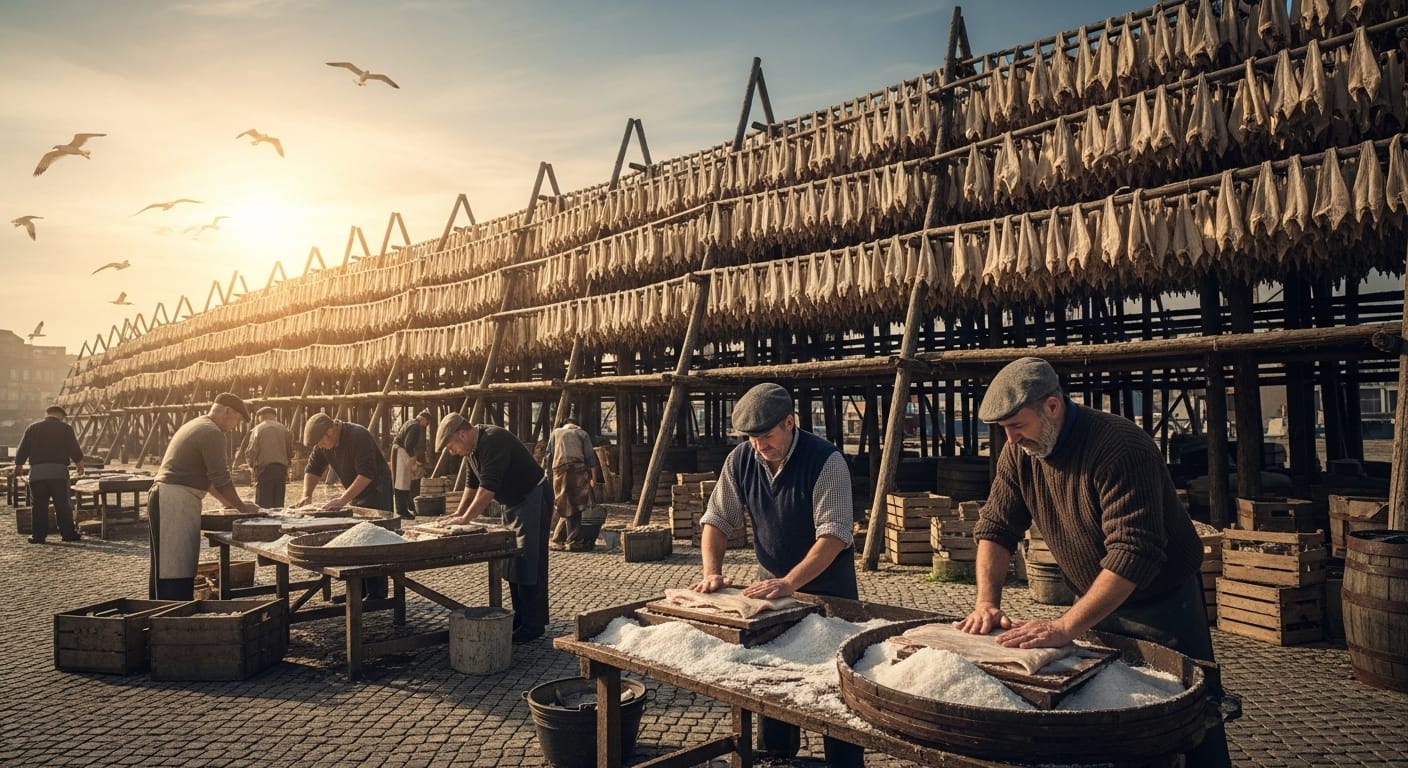
The ability to preserve cod through salting and drying has revolutionized food logistics. This simple but effective process allowed the fish to be stored for long periods without deteriorating, making it ideal for long sea voyages and for domestic consumption throughout the year.
Salty cod has quickly become a priceless commodity. It boosted shipbuilding, the formation of experienced sailors and the creation of a vast commercial network that spanned across Europe and beyond.
Cod fishing was not just an economic activity; It was a sailor school. The men who faced the dangers of the North Atlantic, in small dorises or in large sailboats, acquired crucial expertise and resilience for Portuguese maritime expansion.
From the sea to the plate: sustenance and culture
In Portuguese cuisine, cod is king. Its versatility and the depth of its flavor led to the creation of hundreds of recipes, many of them transmitted from generation to generation. It is a food of comfort, celebration and celebration, present at all tables, from the most humble to the most wealthy.
For centuries, cod was a vital source of protein, especially in the interior regions and during the Lenten and other religious abstinence. Its accessibility and durability ensure the feeding of a growing population, consolidating the cod fish identity maritime portugal in everyday life.
Dishes such as cod à brás, cod with cream or cod fried pads are just a few examples of Portuguese culinary creativity. They are not mere recipes; They are fragments of history, storytellers of a people connected to the sea.
The Bacalhoeira Fleet: Heroism in the North Atlantic
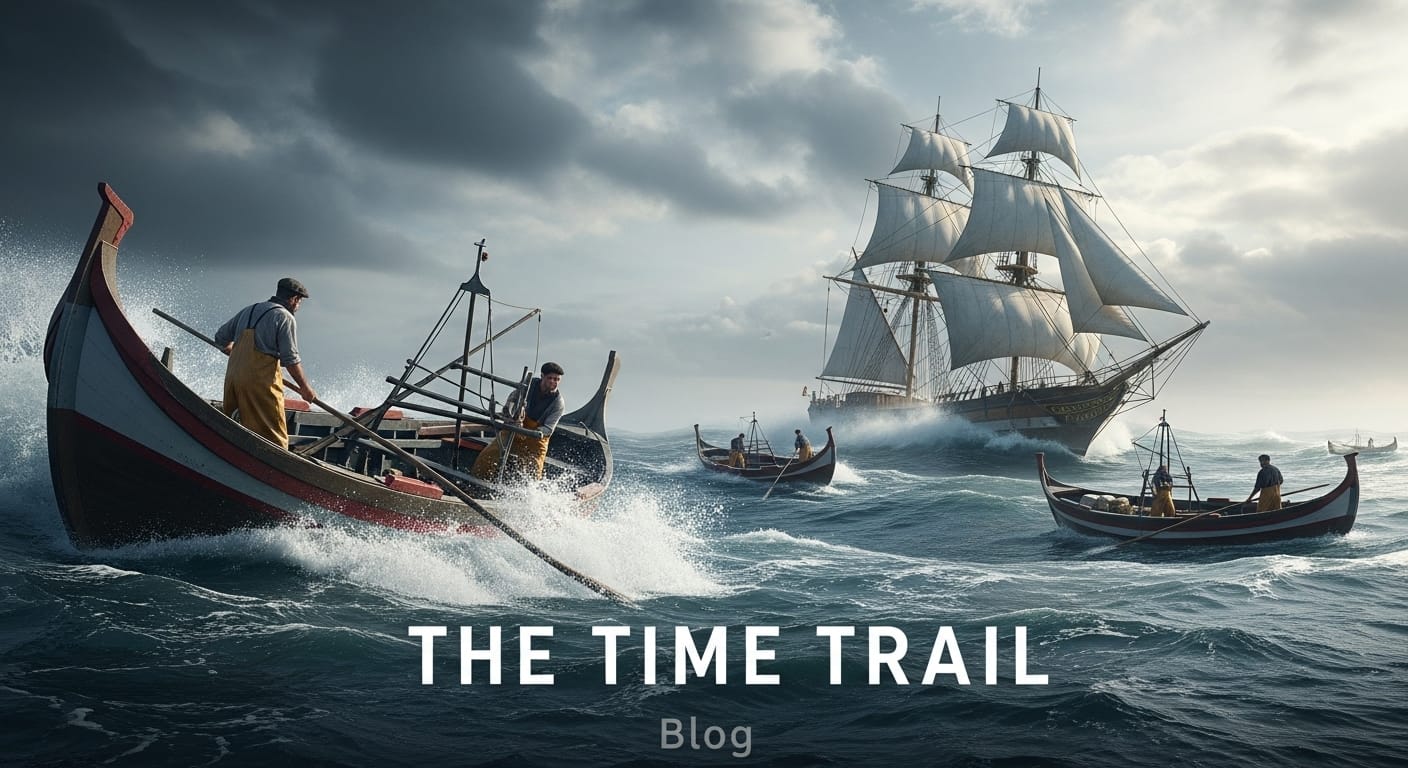
The codfleet ships were known as the “White Fleet”, for its white-painted sails and hoofs. These majestic vessels departed annually from Portuguese ports to the ice cream and dangerous seas of Newfoundland and Greenland.
Life on board was tough and demanding. Fishermen spent months on the high seas, facing storms, dense fogs and the constant risk of sinking. Fishing was carried out on small individual vessels, the dorys, thrown into the sea from the mother ships.
Every man in a dori was an anonymous hero, rowing in treacherous waters, alone, in search of sustenance for his family and the nation. Resilience, courage and solidarity among the fishermen were qualities forged in this daily struggle against the elements and the sea.
social and demographic impact: codfish maritime identity Portugal and communities
The cod industry had a profound impact on the social and demographic structure of Portugal. Coastal villages, such as Aveiro, Ílhavo or Viana do Castelo, flourished around this activity, becoming centers of fishing, shipbuilding and commerce.
Entire families lived due to the cod cycle: men at sea, women and children in processing factories or patching networks. A culture of waiting and resilience was generated, where the departure and return of the ships were moments of great emotion.
Emigration, often to Brazil or to other parts of the Empire, was also influenced by cod fishing. Families who faced difficulties or who sought new opportunities found an open door to other horizons in the maritime experience.
Times of War and Crisis: Cod as a National Strategy
In the 19th and 20th centuries, during periods of conflict and economic instability, cod fishing took on an even greater strategic importance. It was a vital source of food for a country that sought self-reliance and food security.
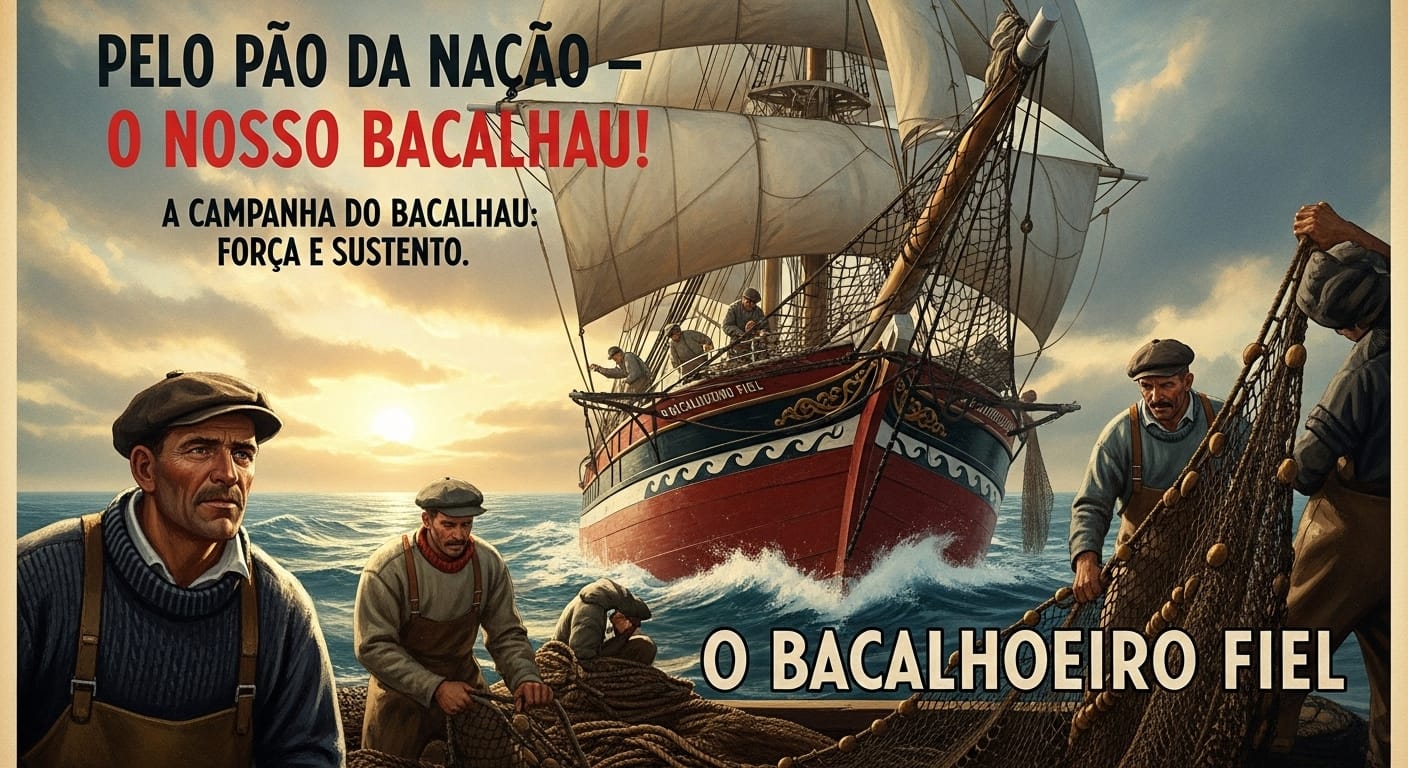
The Estado Novo, in particular, vigorously promoted the cod campaign, investing in the modernization of the fleet and in the training of more fishermen. Cod has become a symbol of Portuguese tenacity, the ability of a people to survive and thrive.
This policy, although controversial in other ways, ensured that Portugal could feed its population in difficult times, reaffirming the central role of cod in food security and cod fish identity maritime portugal.
The Living Legacy: Cod in Portuguese Modernity
Today, although the Portuguese cod fleet no longer dominates the big banks, cod remains an inseparable part of the culture and national gastronomy. Portugal is one of the biggest consumers of per capita cod in the world, importing it from several countries.
The challenges of sustainable fishing and ocean conservation brought new perspectives. The discussion about the origin of cod, its fishing practices and its sustainability are relevant topics today, but its cultural centrality remains unshakable.
Cod has transcended tables and cookbooks. It is a link with the past, a constant memory of the courage of the ancestors and of their unbreakable connection with the sea. It is a narrative of resilience that continues to inspire.
Bacalhau: more than a food, a connection with Portuguese maritime history
Cod is more than a delicious dish; It is a symbol, a guardian of memories and traditions. It represents the perseverance of a people who knew how to transform a distant resource into the cornerstone of their subsistence and their maritime ascension.
It is an inheritance that echoes in each port, in each fishing village, and in each family celebration. The history of cod is the history of Portugal, told through the salt and the sea, the audacity and the mill, consolidating the cod fish identity maritime portugal.
To deepen your curiosity about the history of this remarkable fish, you can consult reliable external sources, such as Page about Cod at Wikipedia.
When we look at a plate of cod, we don’t just see a salty fish. We see centuries of history, the sweat of fishermen, the strength of women, the cunning of merchants and the resilience of a nation that, without this humble food, perhaps had not reached its most audacious horizons.
Cod is, and always will be, the salted soul of Portugal, a true anchor for its maritime identity.
–>


